


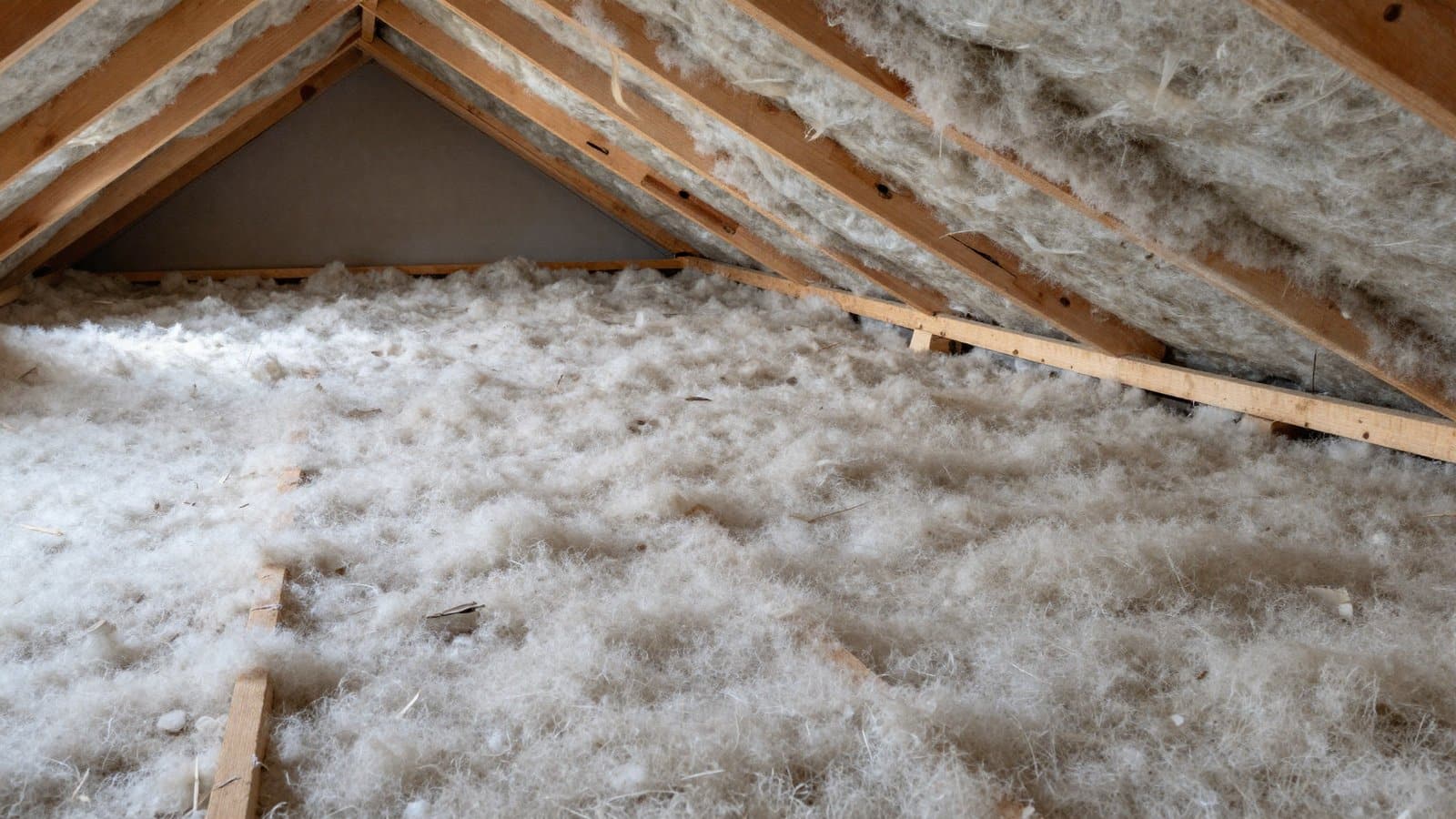
When you choose blown-in insulation, one of the first decisions is the material: cellulose or fiberglass. Both perform well in Texas attics, but they behave differently in our heat and humidity, and the right choice depends on your home and goals. At TemperaturePro Katy-Cypress, we help homeowners weigh the trade-offs honestly rather than pushing one product. A Cypress homeowner focused on eco-friendliness and sound dampening chose cellulose, while a neighbor prioritizing moisture resistance went with fiberglass—both were the right call for their situations.
Here’s how the two compare.
Cellulose Blown-In Insulation
- Composition – Made largely from recycled paper, treated for fire and pest resistance.
- Thermal performance – Dense coverage that resists airflow well, with a strong R-value per inch.
- Sound control – Its density makes it excellent for dampening noise.
- Eco-friendliness – High recycled content appeals to environmentally conscious homeowners.
- Considerations – Heavier and can settle more over time; sensitive to prolonged moisture if a roof leaks.
Fiberglass Blown-In Insulation
- Composition – Spun glass fibers, often with recycled glass content.
- Moisture behavior – Doesn’t absorb water readily, an advantage in humid Gulf Coast attics.
- Weight and settling – Lighter with minimal settling over time.
- Fire resistance – Naturally non-combustible.
- Considerations – Slightly lower R-value per inch than cellulose, so depth matters.
Which Is Right for Your Texas Home?
In our humid subtropical climate, moisture behavior and settling are key considerations. Fiberglass resists moisture and settles less; cellulose offers excellent density and sound control with high recycled content. Either can hit the recommended R-values for the Houston climate when installed to the correct depth. We assess your attic’s ventilation, existing insulation, and goals, then recommend the best fit. Explore our blown-in insulation services and the benefits of blown-in insulation. The U.S. Department of Energy offers neutral background on insulation materials.
Why Katy Homeowners Trust TemperaturePro
We recommend the material that’s right for your home, not the one that’s easiest to sell. Our licensed, insured team installs both to proper depth and R-value with transparent pricing and clean workmanship.
Frequently Asked Questions
Is cellulose or fiberglass better for Texas attics?
Both work well. Fiberglass resists moisture and settles less—useful in humid attics—while cellulose offers high density, sound control, and recycled content. We recommend based on your attic and goals.
Which has a better R-value?
Cellulose has a slightly higher R-value per inch, but fiberglass reaches the same total R-value with a bit more depth. Proper installation matters more than the material alone.
Does cellulose settle over time?
Cellulose can settle more than fiberglass, which is why we install extra depth to account for it and maintain the target R-value.
Is one more moisture-resistant?
Fiberglass generally resists moisture better, an advantage in our humid climate, though both perform well in a properly ventilated, leak-free attic.
Not Sure Which to Choose?
Let us assess your attic and recommend the right material. Call 281-607-5884 or request service online in Katy, Cypress, and Greater Houston.


