


AC Drain Line Clog Repair in Cypress, TX – Professional Water Damage Prevention
Available 24/7 in Cypress | ⭐⭐⭐⭐⭐ 5.0 Google Rating | Licensed & Insured
A clogged AC drain line is one of the most common yet potentially destructive issues a homeowner in Cypress can face. When your air conditioner removes humidity from the thick Texas air, that moisture has to go somewhere. If the exit path is blocked, water backs up into your home, leading to ruined ceilings, mold growth, and system shutdowns. TemperaturePro Katy-Cypress provides rapid, professional drain line clearing and preventative solutions to keep your home dry and your cooling system running efficiently.
Request a Quote for Drain Line Repair
Understanding the Impact of a Clogged Condensate Line
In the humid climate of the Gulf Coast, your air conditioner does more than just lower the temperature; it acts as a massive dehumidifier. This process creates a significant amount of water that must be safely channeled out of your home.
● System Shutdowns: Most modern units have a safety float switch that kills power to the AC when a clog is detected, preventing an overflow but leaving you without cooling. ● Property Damage: An undetected clog can lead to gallons of water leaking into your attic, saturating insulation and causing drywall to collapse. ● Indoor Air Quality: Standing water in a dark drain pan is a breeding ground for biological growth, which can release musty odors into your ductwork. ● Structural Risks: Persistent leaks can rot wooden support beams in your attic or create foundation issues if water pools around the base of your home.
The TemperaturePro Commitment to Cypress Homeowners
TemperaturePro Katy-Cypress is your local expert in resolving drainage failures before they become expensive disasters. We combine technical precision with a neighborly approach to ensure your HVAC system is fully protected against the unique environmental challenges of West Houston.

The Science of Condensation in the Cypress Climate
Living in Cypress, TX, means dealing with some of the highest humidity levels in the country. During a typical summer afternoon, the relative humidity can easily exceed 80%. As your air conditioner pulls this moist air over the cold evaporator coils, the water vapor transitions into a liquid state—a process known as condensation.
A standard residential AC unit in our area can produce anywhere from 5 to 20 gallons of water per day. This water is collected in a primary drain pan located directly beneath the coils and is then gravity-fed through a 3/4-inch PVC pipe to the exterior of your home. However, because this water is often mixed with dust, pollen, and skin cells that bypass your air filter, it creates a nutrient-rich “soup” that allows biological organisms to thrive inside the dark, damp environment of the pipe.
If your system is struggling with moisture management, it may also be susceptible to other issues, such as a frozen evaporator coil, which can exacerbate water overflow problems as the ice eventually melts. Our technicians are trained to look at the entire system to ensure that your drainage issues aren’t a symptom of a larger airflow or refrigerant problem.
Why Do AC Drain Lines Clog?
The “clog” in your drain line is rarely just a pile of dirt. In the heat of Southeast Texas, the most common culprit is a “zoogloea” or “algae bloom.” This is a thick, gelatinous sludge formed by bacteria and fungi.
Algae and Fungal Growth
The interior of a condensate line is the perfect incubator for biological growth. When the water stops moving or the pipe isn’t pitched correctly, these organisms multiply rapidly, creating a plug that is as thick as silicone. This is why a simple “blow out” with a garden hose rarely provides a long-term fix; if the biological colony isn’t neutralized, the clog will return within weeks.
Dust and Debris Accumulation
Even with high-quality air filters, microscopic particles of dust and pet dander eventually make their way onto the wet evaporator coils. This debris is washed into the drain pan, where it settles and hardens into a “mud” that can block the narrow opening of the drain line. This is why regular cooling system maintenance and professional cleaning are so critical for homeowners in Bridgeland, Towne Lake, and other Cypress communities.
Insect and Pest Blockages
It is not uncommon in the West Houston area for small insects, such as mud daubers or wasps, to build nests in the exit point of the condensate line outside your home. These physical blockages prevent any water from escaping, causing an immediate backup into the secondary drain pan.
The Dangers of Water Leaks in Your Attic
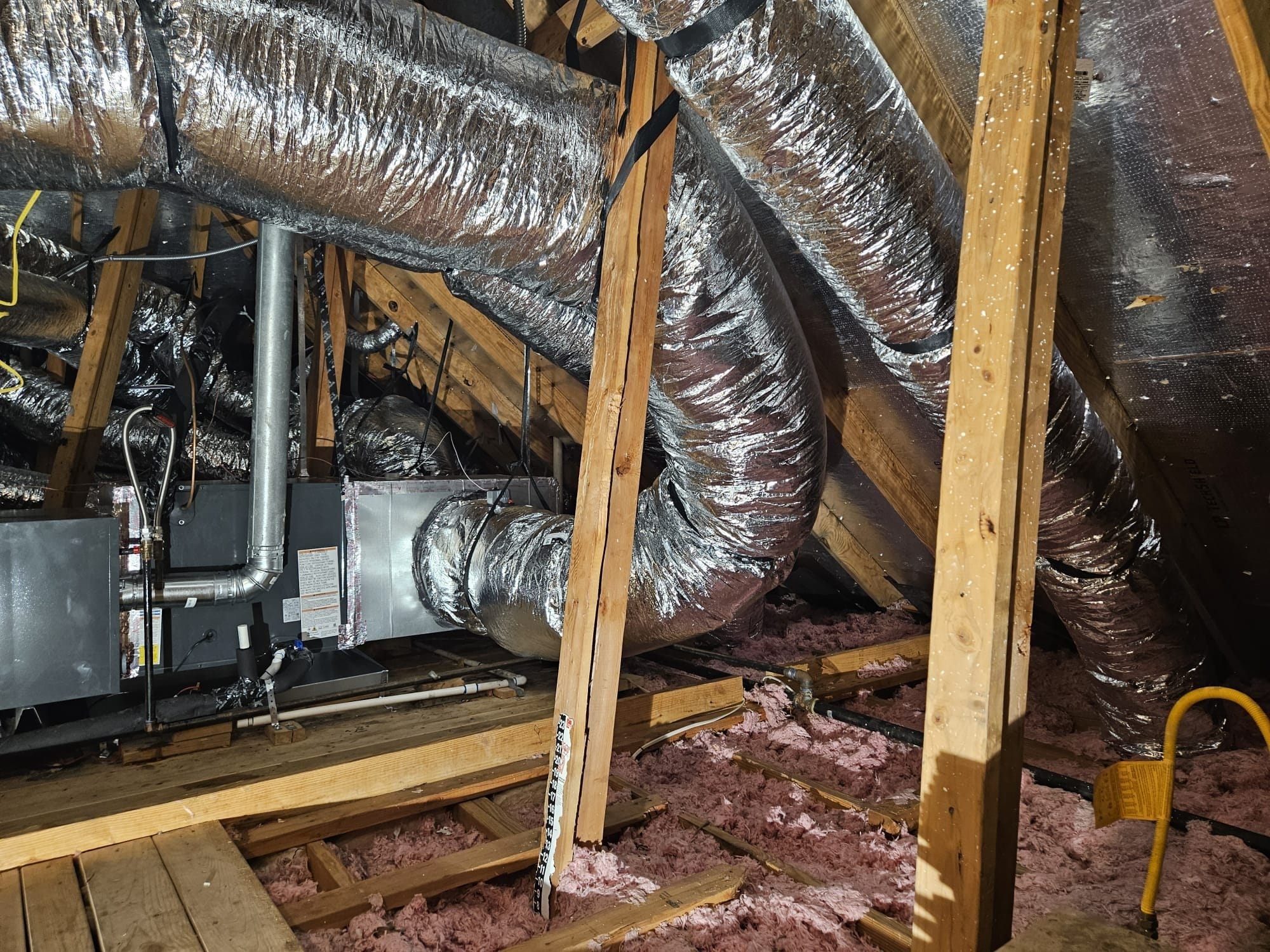
Most HVAC systems in Cypress are located in the attic. This means that a drain line failure happens directly above your living space. If your secondary drain pan is rusted or your safety switch fails, the water has nowhere to go but down.
According to the U.S. Department of Energy air conditioner maintenance guidelines, neglecting the condensate channels can lead to the unit’s inability to reduce humidity, which in turn causes the equipment to operate less efficiently and increases the risk of water damage. In a matter of hours, a minor clog can lead to thousands of dollars in drywall repairs and mold remediation costs.

Our Professional AC Drain Line Repair Process
TemperaturePro Katy-Cypress doesn’t just clear the clog; we restore the integrity of your entire drainage system. Our multi-step process is designed to prevent future emergencies and protect your home’s structure.
1. High-Pressure Clearing (Nitrogen or CO2)
We use regulated bursts of nitrogen or CO2 to physically push the obstruction out of the line. This is far more effective than a standard vacuum because it breaks up the stubborn biological sludge that clings to the walls of the PVC pipe.
2. Industrial Vacuum Extraction
After the line is cleared, we use high-powered vacuums at the exterior termination point to pull out any remaining debris. This ensures that the line is completely smooth and free of “seed” colonies that could cause a new clog.
3. Biological Treatment and Flushing
We flush the line with specialized, HVAC-safe algaecides. Unlike bleach, which can damage plastic and corrode metal drain pans over time, our professional treatments are designed to kill the bacteria and fungi while remaining safe for your plumbing and the environment.
4. Safety Switch Installation and Testing
If your system doesn’t already have one, we highly recommend installing a “Safe-T-Switch.” This is a float-activated sensor that sits in your drain line. If the water begins to back up, the switch instantly cuts power to the air conditioner, preventing an overflow. We test existing switches to ensure they haven’t become “stuck” due to age or corrosion.
5. Drain Pan Inspection
We thoroughly inspect the primary and secondary drain pans for signs of rust, cracks, or improper pitching. If the pan isn’t tilted correctly toward the drain, water will “pond,” leading to the very biological growth we are trying to prevent.
Schedule Your Professional Drain Line Clearing
Serving the Neighborhoods of Cypress, TX
We are proud to be the first choice for HVAC safety and repair for families across the Cypress area. We understand the specific construction styles of local homes and the demands placed on systems in our high-humidity environment.
Our primary service areas include: ● Bridgeland: Protecting modern, high-efficiency systems with advanced float switch technology. ● Towne Lake: Providing rapid response for attic-mounted units in lakeside properties. ● Fairfield: Offering comprehensive drainage audits for established homes. ● Coles Crossing: Ensuring large family homes are protected from ceiling water damage. ● Cypress Creek Lakes: Specialized maintenance for systems in newer residential developments. ● Blackhorse Ranch: Precision clearing for luxury properties with complex HVAC configurations.
Whether you are in the 77433 or 77429 area, our technicians are equipped with the tools and knowledge to resolve your AC drainage issues on the first visit.
Frequently Asked Questions (FAQ)
How do I know if my AC drain line is clogged? The most common signs are water pooling in the secondary drain pan (the metal tray under your unit), a musty smell coming from your vents, or your air conditioner suddenly refusing to turn on. If you see water dripping from a pipe located high up on an exterior wall (usually above a window), that is your secondary “warning” line telling you the primary line is blocked.
Can I use bleach to clear my AC drain line? While bleach can kill algae, we generally advise against it. Bleach is highly corrosive and can damage the plastic of the PVC over time, and the fumes can be pulled into your home’s air supply. We use specialized, non-corrosive biological cleaners that are safer and more effective.
Why did my AC stop working when the drain clogged? Most modern systems in Cypress are equipped with a float switch. When the water in the drain line rises too high, the switch trips and cuts power to the outdoor unit. This is a safety feature designed to prevent your attic from flooding.
How often should I have my drain line cleared? We recommend a professional flushing and treatment at least once a year as part of your spring maintenance. In homes with high pet dander or older ductwork, twice-a-year service may be necessary to prevent mid-summer emergencies.
What is the “secondary” drain line? Most Cypress homes have two drain lines. The primary line usually drains into a bathroom sink’s plumbing. The secondary line is a backup that typically exits through a soffit or above a window. If you see water dripping from a pipe outside that is usually dry, your primary line is clogged and needs immediate attention.
{
“@context”: “https://schema.org”,
“@graph”: [
{
“@type”: [
“LocalBusiness”,
“HomeAndConstructionBusiness”
],
“@id”: “https://www.blitzproservices.com/#localbusiness”,
“name”: “TemperaturePro Katy-Cypress”,
“url”: “https://www.blitzproservices.com/”,
“image”: “https://storage.googleapis.com/msgsndr/6N5PyOZfHgoibacIGtDu/media/688cfcd70b03e1274241eca1.png”,
“telephone”: “+1-281-803-8450”,
“email”: “contact@blitzproservices.com”,
“slogan”: “Expert Thawing and Restoration”,
“address”: {
“@type”: “PostalAddress”,
“streetAddress”: “25807 Westheimer Pkwy Suite 350”,
“addressLocality”: “Katy”,
“addressRegion”: “TX”,
“postalCode”: “77494”,
“addressCountry”: “US”
},
“areaServed”: [
{
“@type”: “City”,
“name”: “Cypress”,
“address”: {
“@type”: “PostalAddress”,
“addressRegion”: “TX”,
“addressCountry”: “US”
}
},
{
“@type”: “AdministrativeArea”,
“name”: “Bridgeland”
},
{
“@type”: “AdministrativeArea”,
“name”: “Towne Lake”
},
{
“@type”: “AdministrativeArea”,
“name”: “Fairfield”
},
{
“@type”: “AdministrativeArea”,
“name”: “Coles Crossing”
},
{
“@type”: “AdministrativeArea”,
“name”: “Blackhorse Ranch”
}
],
“openingHoursSpecification”: [
{
“@type”: “OpeningHoursSpecification”,
“dayOfWeek”: [
“Monday”,
“Tuesday”,
“Wednesday”,
“Thursday”,
“Friday”
],
“opens”: “08:00”,
“closes”: “18:00”
}
],
“sameAs”: [
“https://www.facebook.com/TemperatureProKatyCypress”
]
},
{
“@type”: “Service”,
“@id”: “{{PAGE_URL}}#service”,
“name”: “Frozen AC Coil Repair in Cypress, TX”,
“serviceType”: “HVAC Repair”,
“description”: “Professional diagnosis and repair for frozen evaporator coils. Our process includes safe thawing, cleaning, airflow testing, and refrigerant leak detection.”,
“url”: “{{PAGE_URL}}”,
“provider”: {
“@id”: “https://www.blitzproservices.com/#localbusiness”
},
“areaServed”: [
{
“@type”: “City”,
“name”: “Cypress”,
“address”: {
“@type”: “PostalAddress”,
“addressRegion”: “TX”,
“addressCountry”: “US”
}
}
],
“hasOfferCatalog”: {
“@type”: “OfferCatalog”,
“name”: “Frozen AC Coil Restoration Services”,
“itemListElement”: [
{
“@type”: “Offer”,
“itemOffered”: {
“@type”: “Service”,
“name”: “Safe Controlled Thawing”
}
},
{
“@type”: “Offer”,
“itemOffered”: {
“@type”: “Service”,
“name”: “Refrigerant Leak Detection”
}
},
{
“@type”: “Offer”,
“itemOffered”: {
“@type”: “Service”,
“name”: “Evaporator Coil Cleaning”
}
},
{
“@type”: “Offer”,
“itemOffered”: {
“@type”: “Service”,
“name”: “Airflow and Static Pressure Testing”
}
}
]
}
},
{
“@type”: “FAQPage”,
“@id”: “{{PAGE_URL}}#faq”,
“url”: “{{PAGE_URL}}”,
“mainEntity”: [
{
“@type”: “Question”,
“name”: “How long does it take for an AC coil to thaw?”,
“acceptedAnswer”: {
“@type”: “Answer”,
“text”: “Depending on the thickness of the ice and the temperature of the home, it can take anywhere from 2 to 24 hours for a coil to thaw completely.”
}
},
{
“@type”: “Question”,
“name”: “Can I use a hair dryer to melt the ice on my AC?”,
“acceptedAnswer”: {
“@type”: “Answer”,
“text”: “No. The heat from a hair dryer is inconsistent and can cause copper pipes to expand unevenly. It also creates a safety hazard near water and electrical components.”
}
},
{
“@type”: “Question”,
“name”: “Will a frozen AC fix itself?”,
“acceptedAnswer”: {
“@type”: “Answer”,
“text”: “No. While the ice will eventually melt if the system is off, the underlying cause—such as airflow or refrigerant issues—will still be present and cause it to freeze again.”
}
}
]
}
]
}


