


Available 24/7 in Cypress | ⭐⭐⭐⭐⭐ 5.0 Google Rating | Licensed & Insured
It is a striking irony of the Texas Gulf Coast climate: while the outdoor temperature in Cypress may be soaring toward triple digits, the internal components of your air conditioning system can actually become encased in a block of ice. A frozen evaporator coil is a serious mechanical failure that halts the cooling process and puts your compressor at risk of permanent damage. TemperaturePro Katy-Cypress provides specialized frozen AC coil repair services, utilizing a systematic approach to safely thaw your equipment, identify the underlying cause, and restore your home’s comfort.
Request a Quote for Expert AC Repair
Immediate Steps to Take if Your AC Is Frozen
If you notice ice forming on the copper lines leading into your home or on the indoor air handler, you must act quickly to prevent mechanical strain. Continuing to run a system with a frozen coil can lead to a “slugged” compressor—a catastrophic failure that often requires a total system replacement.
- Turn the System Off: Switch your thermostat from “Cool” to “Off” immediately. This stops the refrigeration cycle and prevents further ice accumulation.
- Switch the Fan to “On”: Do not leave the fan on “Auto.” By switching it to “On,” you force unconditioned air over the ice, which helps the thawing process begin naturally.
- Check for Water: As the ice melts, it may overwhelm your primary drain pan. Keep an eye on the area around your indoor unit to prevent secondary water damage to your flooring or ceilings.
- Do Not Pick at the Ice: Never use a screwdriver, hair dryer, or heat gun to remove ice from the delicate aluminum fins of the evaporator coil. This can lead to refrigerant leaks and permanent coil damage.
Why Do Air Conditioners Freeze in the Cypress Heat?
A frozen AC coil is never the problem itself; it is a symptom of a deeper issue within the HVAC system. Air conditioners rely on a precise balance of airflow and refrigerant pressure to remove heat from your home. When this balance is disrupted, the temperature of the evaporator coil drops below 32 degrees Fahrenheit, causing the humidity in the air to flash-freeze onto the metal surfaces.
Airflow Restrictions: The Primary Culprit
The most common reason for a frozen coil is restricted airflow. Your air conditioner works by blowing warm indoor air over a cold evaporator coil. The heat in your home is absorbed by the refrigerant, which prevents the coil from getting too cold. If the air cannot reach the coil, the refrigerant temperature plummets, turning the condensation on the coil into ice.
Common airflow issues we encounter in Cypress include:
- Severely Dirty Air Filters: A filter clogged with dust, pet dander, and local allergens acts as a wall, preventing air from entering the system.
- Blocked Return Vents: Furniture or heavy drapes blocking the large intake vents in your home can starve the system of air.
- Closed Supply Registers: Closing more than two or three vents in unused rooms can disrupt the internal pressure of the system, leading to coil freezing.
- Dirty Evaporator Coils: Over time, dust that bypasses the filter can coat the coil itself, creating an insulating layer that prevents heat transfer.
Refrigerant Issues and Pressure Drops
Another frequent cause of ice buildup is a low refrigerant charge. It may seem counterintuitive that less “coolant” leads to more ice, but the physics of the refrigeration cycle are clear. When refrigerant levels are low due to a leak, the pressure inside the evaporator coil drops. According to the principles of thermodynamics, as pressure drops, so does temperature. This causes the remaining refrigerant to run much colder than designed, freezing the moisture in the air instantly.
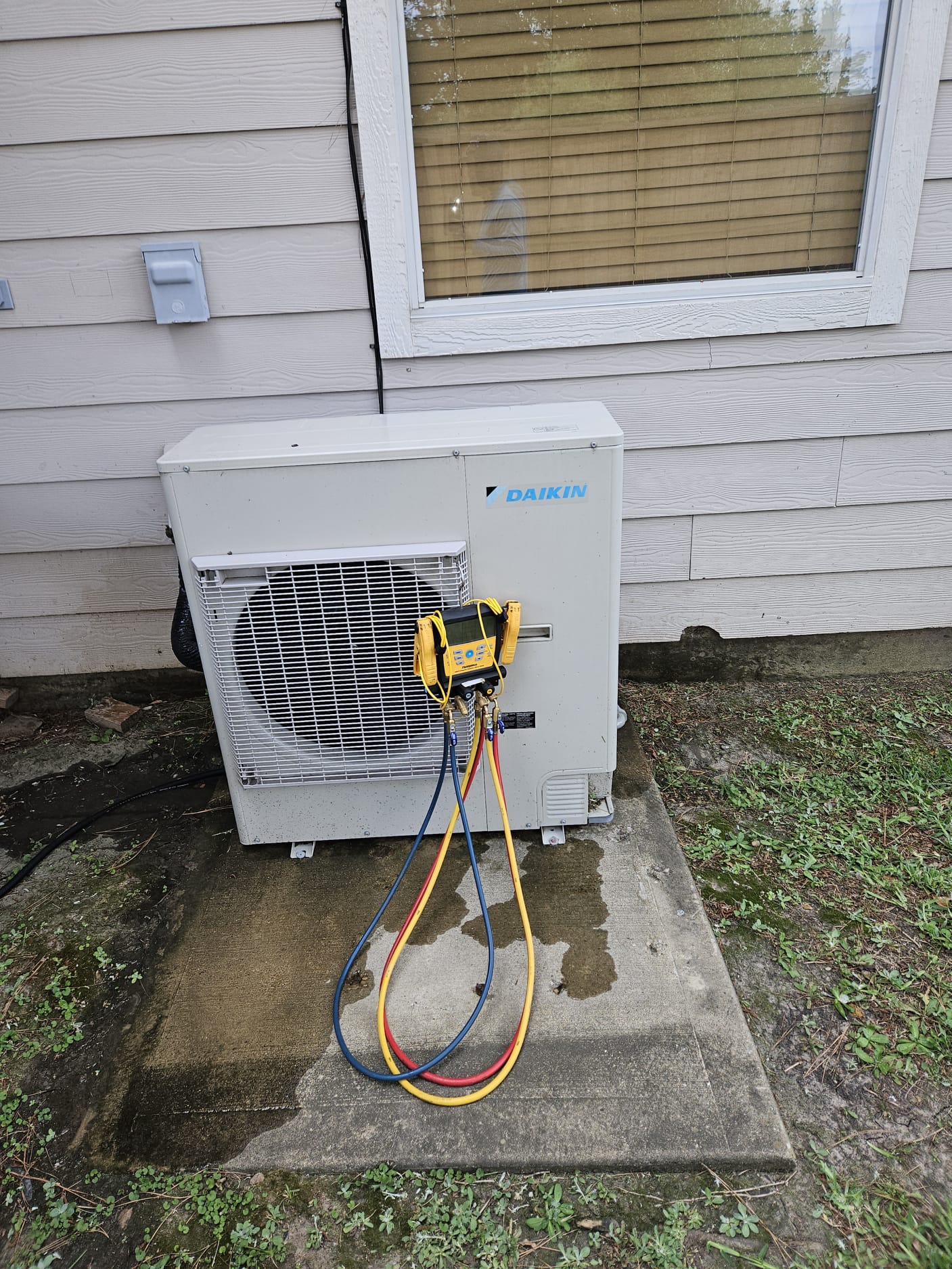
To understand the complexity of these systems, many homeowners consult the U.S. Department of Energy guidelines on air conditioner performance, which highlight how critical proper refrigerant levels and airflow are to preventing mechanical failures. Our technicians use digital manifolds to measure these pressures with extreme accuracy, ensuring your system operates within the manufacturer’s specified range.
The Dangers of Ignoring a Frozen AC Coil
Ignoring a frozen coil or simply waiting for it to melt and turning the system back on is a recipe for disaster. The ice acts as an insulator, meaning your system will run longer and harder without actually cooling your home. This leads to:
- Compressor Failure: The compressor is designed to pump refrigerant gas. If the coil is frozen, the refrigerant may remain in a liquid state as it returns to the outdoor unit. Liquid refrigerant can “slug” the compressor, destroying the internal pistons and valves.
- Water Damage: A frozen coil can hold several gallons of water in the form of ice. When it melts rapidly, it often bypasses the standard condensate drainage system, leading to leaks in your attic or utility closet.
- High Energy Bills: A frozen system is an inefficient system. You may see your utility costs double or triple as the unit struggles to maintain a set temperature it can no longer reach.
Our Professional Frozen Coil Restoration Process
When a TemperaturePro Katy-Cypress technician arrives at your home, we don’t just melt the ice and leave. We perform a comprehensive diagnostic of your entire cooling system to ensure the problem does not return.
Step 1: Safe Controlled Thawing
We verify that the system is safely powered down and use professional-grade blowers to accelerate the thawing process without damaging the sensitive aluminum fins. We also ensure that the meltwater is diverted properly to prevent any damage to your Cypress home.
Step 2: Coil Cleaning and Inspection
Once the ice is gone, we inspect the coil for signs of “pitting” or corrosion, which are common in the humid Houston climate. We use specialized, self-rinsing cleaners to remove any biofilm or dust that could be contributing to the airflow restriction.
Step 3: Airflow and Static Pressure Testing
We use manometers to measure the static pressure within your ductwork. This tells us if your blower motor is operating at the correct speed or if there are obstructions in your ducts that are causing the system to “choke” on air.
Step 4: Refrigerant Leak Detection
If we suspect low refrigerant is the cause, we utilize electronic “sniffers” to find the exact location of the leak. We provide you with a clear quote for a permanent repair, such as replacing the evaporator coil or repairing a copper line, rather than just offering a temporary recharge.
Serving Cypress Neighborhoods with Integrity
TemperaturePro Katy-Cypress is deeply rooted in the local community. We understand the specific architectural styles and HVAC challenges found in Cypress neighborhoods. Whether you live in a modern energy-efficient home in Bridgeland or a spacious property in Towne Lake, we have the expertise to handle your specific system requirements.
We regularly provide frozen coil repairs in:
- Fairfield: Addressing aging systems that need careful maintenance.
- Cypress Creek Lakes: Providing high-efficiency solutions for newer builds.
- Coles Crossing: Ensuring large family homes stay cool during peak summer months.
- Bridgeland & Towne Lake: Servicing advanced variable-speed systems that require specialized diagnostic tools.
- Blackhorse Ranch: Offering comprehensive HVAC audits for luxury properties.
Frequently Asked Questions (FAQ)
How long does it take for an AC coil to thaw?
Depending on the thickness of the ice and the temperature of the home, it can take anywhere from 2 to 24 hours for a coil to thaw completely. We recommend leaving the system off and the fan on for at least 12 hours before a technician arrives for a full diagnostic.
Can I use a hair dryer to melt the ice on my AC?
We strongly advise against this. The heat from a hair dryer is inconsistent and can cause the copper pipes to expand unevenly. Furthermore, the proximity of water and electrical heat sources creates a safety hazard.
Why did my AC freeze up even though I just changed the filter?
While a dirty filter is the most common cause, it is not the only one. You may have a refrigerant leak, a failing blower motor, or a dirty evaporator coil that requires professional cleaning. A fresh filter cannot overcome these mechanical issues.
Will a frozen AC fix itself?
No. While the ice will eventually melt if you turn the system off, the underlying cause (airflow or refrigerant issues) will still be present. The moment you turn the cooling back on, the ice will begin to reform.
Is a frozen coil covered by my warranty?
In many cases, the parts (like the evaporator coil or expansion valve) may be covered by a manufacturer’s warranty if the unit is less than 10 years old. However, labor and refrigerant are typically not covered. We can help you navigate your warranty claim to minimize your out-of-pocket costs.


