


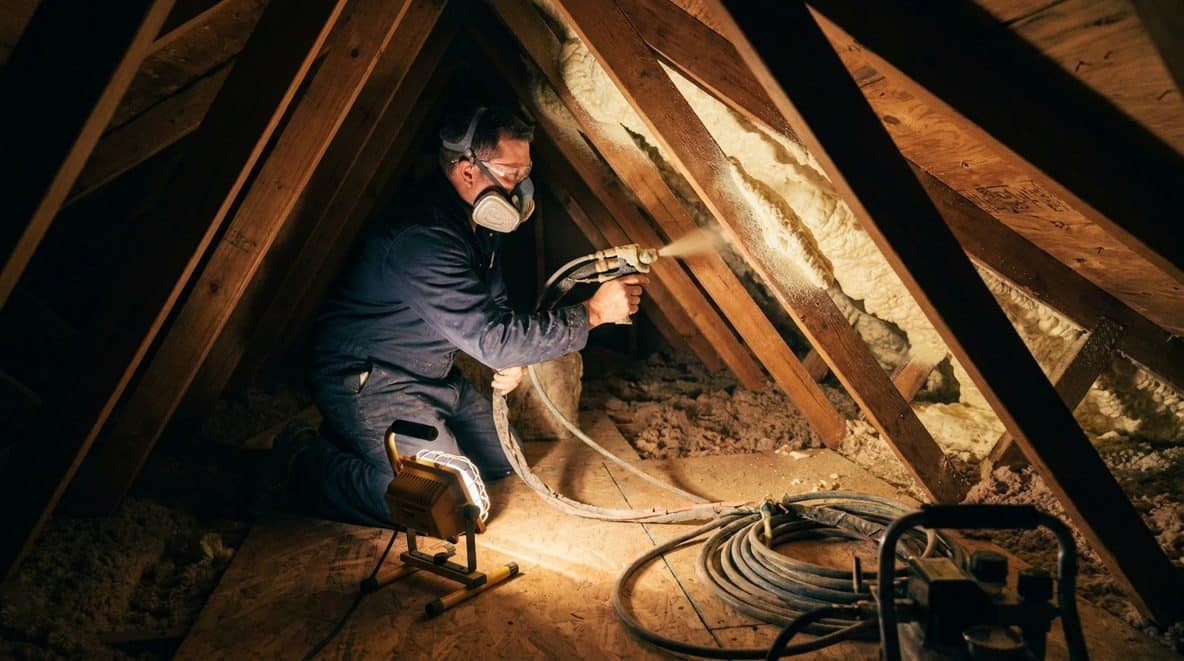
Is your upstairs hot all summer, even with the AC running? Spray foam insulation seals air leaks and insulates in one step. TemperaturePro Katy-Cypress helps Katy, Cypress and Houston-area homeowners decide if spray foam is the right fit.
What Is Spray Foam Insulation?
Spray foam starts as a liquid and expands into foam as it is sprayed. It fills gaps, cracks and odd-shaped spaces. Once it cures, it insulates and blocks air leaks at the same time.
The U.S. Department of Energy calls closed-cell spray foam an excellent air barrier. It can remove the need for separate air sealing work.
Open-Cell vs. Closed-Cell Spray Foam
There are two main types. Each one fits different jobs.
- Open-cell foam – Lighter and lower density. It blocks air, but the Department of Energy notes it does not stop water vapor.
- Closed-cell foam – Denser, with a higher R-value. It is very resistant to moisture, blocks water vapor and adds strength to the structure.
The right choice depends on where the foam goes and your budget. We walk you through it before any work starts.
Spray Foam vs. Blown-In Insulation
Both are good options. They just solve problems in different ways.
- Air sealing – Spray foam seals as it insulates. Blown-in insulation works best with air sealing done first.
- Where it goes – Spray foam is often applied to the roof deck, walls or rim joists. Blown-in insulation covers the attic floor.
- Cost – Blown-in insulation usually costs less up front. Spray foam costs more but does two jobs at once.
For many Katy attics, blown-in insulation on the attic floor is the budget-friendly choice. Spray foam makes sense for hard-to-seal spots, or when you want the attic sealed off from outside heat. Compare materials in our cellulose vs. fiberglass guide.
How Much Insulation Does a Houston-Area Home Need?
Harris, Fort Bend and Waller counties sit in Climate Zone 2A. For Zone 2, ENERGY STAR recommends R49 for an uninsulated attic. If your attic already has 3 to 4 inches, it recommends adding R38.
ENERGY STAR also says sealing air leaks and adding insulation can save up to 10% on annual energy bills. See our Houston R-value guide for more detail.
Why Spray Foam Needs a Pro
The Department of Energy says spray foam must be installed by trained professionals. The foam gives off harmful gases while it is sprayed. Installers need good ventilation, respirators and protective gear. Some experts suggest people stay out of the home for up to 24 hours after. Foam also has to be sprayed at the right thickness, and mistakes are hard to fix once it cures.
Insulation and Your AC Work Together
A hot, leaky attic makes your AC run longer. Better insulation and air sealing help your system keep up in a Texas summer. Because we are an HVAC company, we look at your whole system, not just the attic. Learn more in our insulation and HVAC guide.
Frequently Asked Questions
Is spray foam better than blown-in insulation?
Not always. Spray foam seals air leaks and insulates at once. Blown-in insulation usually costs less. The best choice depends on your attic and your budget.
What is the difference between open-cell and closed-cell foam?
Closed-cell foam is denser, has a higher R-value and blocks water vapor. Open-cell foam is lighter and lower density. It blocks air but not water vapor.
Can I install spray foam myself?
No. The Department of Energy says spray foam must be installed by trained professionals. It gives off harmful gases while it is applied, so it needs proper ventilation and safety gear.
Do you install spray foam in Cypress and Houston too?
Yes. We serve Katy, Cypress and Greater Houston. Call 281-607-5884 to set up an assessment.
Get a Spray Foam Assessment in Katy
Call 281-607-5884 or request service online. We will check your attic and tell you if spray foam or blown-in insulation is the better fit.


